Since the beginning, or close to it, the largest controversy around the iPad has been whether it does enough for a tablet. Prior to 2010, tablets had typically been Windows PCs with touchscreens — so when Apple’s answer arrived, some people were disappointed that it was essentially an oversized iPhone. Useful, but mostly for giving apps a bigger canvas to paint on.
Over the past 15 years, Apple has ever-so-slowly crept in the direction of adding Mac-like functionality. It’s at the point now, I feel, that some people can legitimately use an iPad in place of a laptop. In fact I’ll sometimes use my own iPad to get work done, although there are a variety of specific prerequisites I’d suggest before taking the leap.
A keyboard case with a trackpad
And maybe another pointer of choice
For most people, I think, this one is non-negotiable. It is possible to use a separate USB or Bluetooth keyboard — but you’ll have to remember to pack it in your bag whenever you travel, and that still doesn’t solve the issue of propping up your iPad at a usable angle. Separate keyboards also lack trackpads, which give you a more precise pointing option than your finger.
The default for a lot of iPad owners is Apple’s Magic Keyboard — or Magic Keyboard Folio, in the case of the A16 iPad — but those aren’t your only options. I personally use a Logitech case, and more budget-minded shoppers seem to gravitate towards ESR’s Magic Keyboard clones. I wonder sometimes if Apple isn’t shooting itself in the foot by charging as much for some Magic Keyboards as it does for an entry-level iPad.
Most people don’t need an Apple Pencil, to be blunt.
Regardless, the better keyboard cases use magnetic attachment, meaning you can quickly pull your iPad off if all you want to do is lounge with your iPad on the couch. Ideally you’ll get one that uses your iPad’s Smart Connector, since that enables instant pairing and passthrough charging. These features are guaranteed with Magic Keyboards, which does explain some of their appeal.
A regular question in this department is whether you should add a mouse, an Apple Pencil, or both. Most people don’t need an Apple Pencil, to be blunt — it’s great for drawing, image editing, and handwriting, but for everything else, you’ll probably prefer a mouse. If you do need a stylus, you don’t have to buy an Apple Pencil. There are cheaper alternatives, particularly if you don’t need the upgrades in the Apple Pencil Pro.
The right iPad for your needs
Bigger is usually better

Some good news here is that a lot of people can get away with using an 11-inch iPad. You’ll probably want to go to Settings -> Display Zoom and toggle on More Space, but that provides enough real estate to check emails, browse the web, or maybe edit a simple Excel spreadsheet (more on that later). I’ve written articles on 11-inch iPads before. For entertainment, smaller may actually be better, since it’s easier to wield on the couch or stuff in a carry-on bag.
You’ll want to step up to a 13-inch Air or Pro for a true laptop replacement.
Realistically, though, you’ll want to step up to a 13-inch Air or Pro for a true laptop replacement. The reason is multitasking — while you can do it on a smaller iPad, don’t expect to do much. When I write, for instance, I normally prefer to have side-by-side access to my research material. On an 11-inch display, writing in Google Docs feels claustrophobic, and I can’t read as much in Chrome as I’d like. There’s just no way I’d consider running Photoshop alongside anything else without a 13-inch screen.
There are other considerations beyond size. Only iPads with M-series processors (Airs and Pros) can extend their desktop to an external monitor instead of just mirroring, and if you get the base iPad, you’ll be stuck at USB 2.0 data speeds — mightily inconvenient if you need to transfer gigabyte-sized files. In fact, only Pros support Thunderbolt docks and accessories, despite that tech having been on Macs for ages.
The iPadOS 26 update
Treating iPad owners like grown-ups

iPadOS 26 has proven controversial, mostly because of some rough edges. The biggest was Apple’s initial decision to remove Slide Over. I rarely use the feature, which lets you swipe in an offscreen app for quick access, but apparently I’m in the minority on that point. There was so much pushback that Apple re-introduced the option in iPadOS 26.1.
You can not only position windows wherever you like, at long last, but fit more of them onscreen.
Otherwise, though, iPadOS 26 finally feels closer to a laptop-level operating system. You can not only position windows wherever you like, at long last, but fit more of them onscreen. Mac-like “stoplight” buttons make it easier to resize or close apps, and there’s even a Mac-style Menu Bar you can swipe down. I know other people are keen on the ability to slap folders in the Dock, or execute long downloads and exports in the background.
There’s still ground for Apple to cover before iPadOS feels just as powerful as macOS or Windows — that’s an article in its own right — but updating to iPadOS 26 now feels essential for replicating the laptop experience, especially if you’re docking with an external display. You’re not really taking advantage of a monitor without the new window options.
A cross-platform productivity suite
Make your iPad a Swiss army knife

You’ll probably need a few specialized apps to get your job, school, or home tasks done. Outside of writing and research for example, I need Asana and Slack, but those won’t be of much use to a photographer, or someone trying to run calculations for their Astrophysics degree.
Just about everyone could use access to things like a word processor, a spreadsheet app, presentation software, and some sort of digital notebook.
Just about everyone could use access to things like a word processor, a spreadsheet app, presentation software, and some sort of digital notebook, however. My suggestion is to stick to a productivity suite you can access from as many devices as possible without sacrificing functionality. While it’s nice that Apple’s iWork suite is included for free, it’s a poor choice if you want to access documents on a Windows PC or an Android phone. Those platforms are limited to a stripped-down web interface, so they’ll only do in a pinch.
My go-to is Google Workspace. There are native apps for iPadOS, iOS, and Android, and on the web, you’re not missing anything. More importantly perhaps, it’s still free unless you need to upgrade to a particular storage or business plan. I actually recommend against the Microsoft 365 suite unless you’re already using it, or your employer demands it — you need a paid subscription to unlock full app features on any platform. Casual users don’t need Word to write a book report, or OneNote to jot down Evolutionary Anthropology notes.
Apps may be the largest remaining weakpoint of using an iPad instead of a laptop. Apple remains strict about how iPad apps can interact with each other, and some third-party developers treat the platform as an afterthought. Before buying in, make sure everything you need is accessible and ready to work the way you expect it to.
Trending Products
HP 2024 Laptop | 15.6″ FHD (1...
Lenovo V-Series V15 Business Laptop...

HP 24mh FHD Pc Monitor with 23.8-In...

Thermaltake Ceres 300 Matcha Green ...

ASUS TUF Gaming 27″ 1080P Mon...
Acer Nitro 27″ WQHD 2560 x 14...

CORSAIR iCUE 4000X RGB Tempered Gla...
SAMSUNG 32-Inch ViewFinity S7 (S70D...
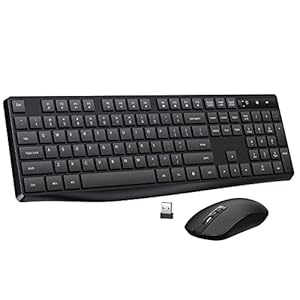
Wi-fi Keyboard and Mouse Combo, Lov...